

Into the Wild Heart of the Amazon
Issue 016 Essay: A luxury river cruise deep into the Peruvian Amazon reveals vibrant untamed beauty—and threats to this fragile ecosystem's future.

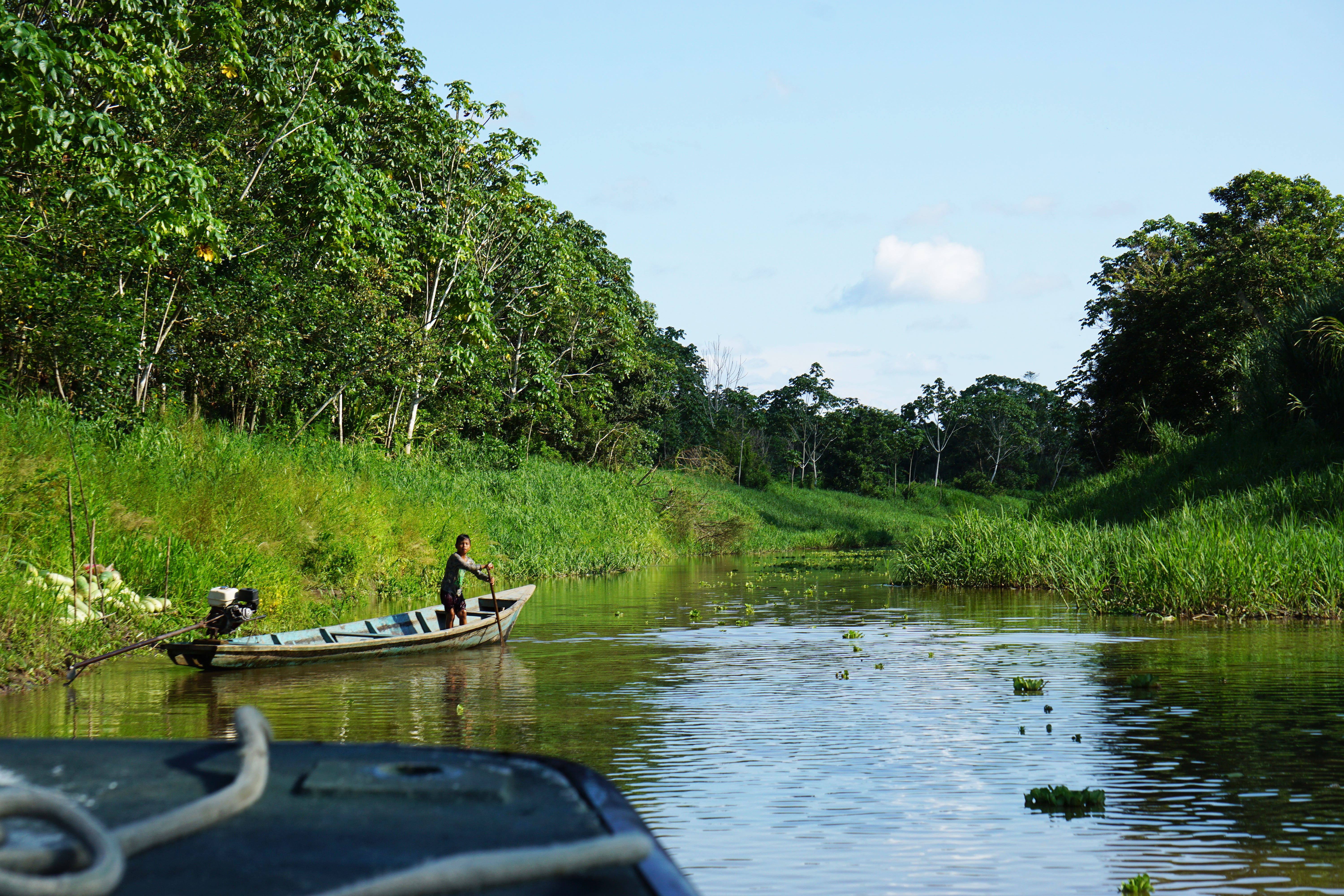
To begin, I’d like to wish a very happy 100th birthday to one of my all-time heroes, Sir David Attenborough. His groundbreaking BBC documentaries opened my eyes to the wonders of the natural world as a child, and will never cease to thrill, soothe, and inspire me today. I put on Planet Earth whenever I want to relax, as a reminder of the beauty of the world and the mind-blowing variety of life we share it with. I’ve watched every episode countless times, and of all the places to which Sir David and his intrepid production crews have traveled, the one that I never imagined I would get to experience myself was the Amazon.
Endless mystery surrounds this vast river system and the surrounding rainforest, and many myths (and truths) are associated with the peoples and wildlife one might encounter there. For years I’ve heard of flesh-eating fish (true!), aquatic creatures that swim up urine streams (myth!), and tribes that have never had contact with the rest of society (lucky them!). Meanwhile, movies like Anaconda play on the peril associated with the creatures that lurk in the Amazonian waters, while even sweet Paddington Bear originated from remote, unexplored “Darkest Peru”—a term we no longer use.
When I received the email inviting me on a small group trip to explore this mystical wilderness with Abercrombie & Kent, I’ll admit I shed a few tears of excitement. A journey on the luxury tour operator’s brand-new Pure Amazon riverboat would take us deep into the Peruvian Amazon, to search for wildlife, learn about the ecology of this beguiling place, and relax on this luxurious vessel in between. I was poised to experience my own episode of Planet Earth—in style, no less!
Journeying into the Amazon
The expedition began in Lima, where we spent a whirlwind 24 hours “acclimatizing” and learning about Peruvian culture. On an overcast day, a guided art walk took us past the bright murals of the Barranco neighborhood, we mixed pisco sours to the soundtrack of live Huyano folk music at boutique Hotel B, then dined at moodily lit Xoma on a seafood menu that included tiger-milk scallops that I still dream about. To cap a packed day, we made one quick final stop for late-night cocktails at sci-fi-inspired Lady Bee—a consistent climber on the World’s 50 Best Bars list.
The next morning, we swapped the arid Pacific coast for the northeast rainforest, as we flew less than two hours to the regional hub of Iquitos. As soon as we landed, the air weighed 10 times thicker and engulfed us in heat and moisture, so we quickly boarded our little, thankfully air-conditioned bus for a long, bumpy ride to the river port of Nauta.
Darkness had fallen by the time we arrived at the Abercrombie & Kent terminal, a small, thatched wooden building in which we finalized our registrations, and collected our lifejackets, torches, and wellington boots. Bats flitted around the roof while a man watched TV under a fluorescent light next door, as we descended to the water to board the fleet of narrow skiff boats. These would take us across the vast Marañón River, which joins the Ucayali River just a few miles downstream to become the mighty Amazon, to our glowing, glamorous vessel on the opposite bank.
All Aboard the Pure Amazon
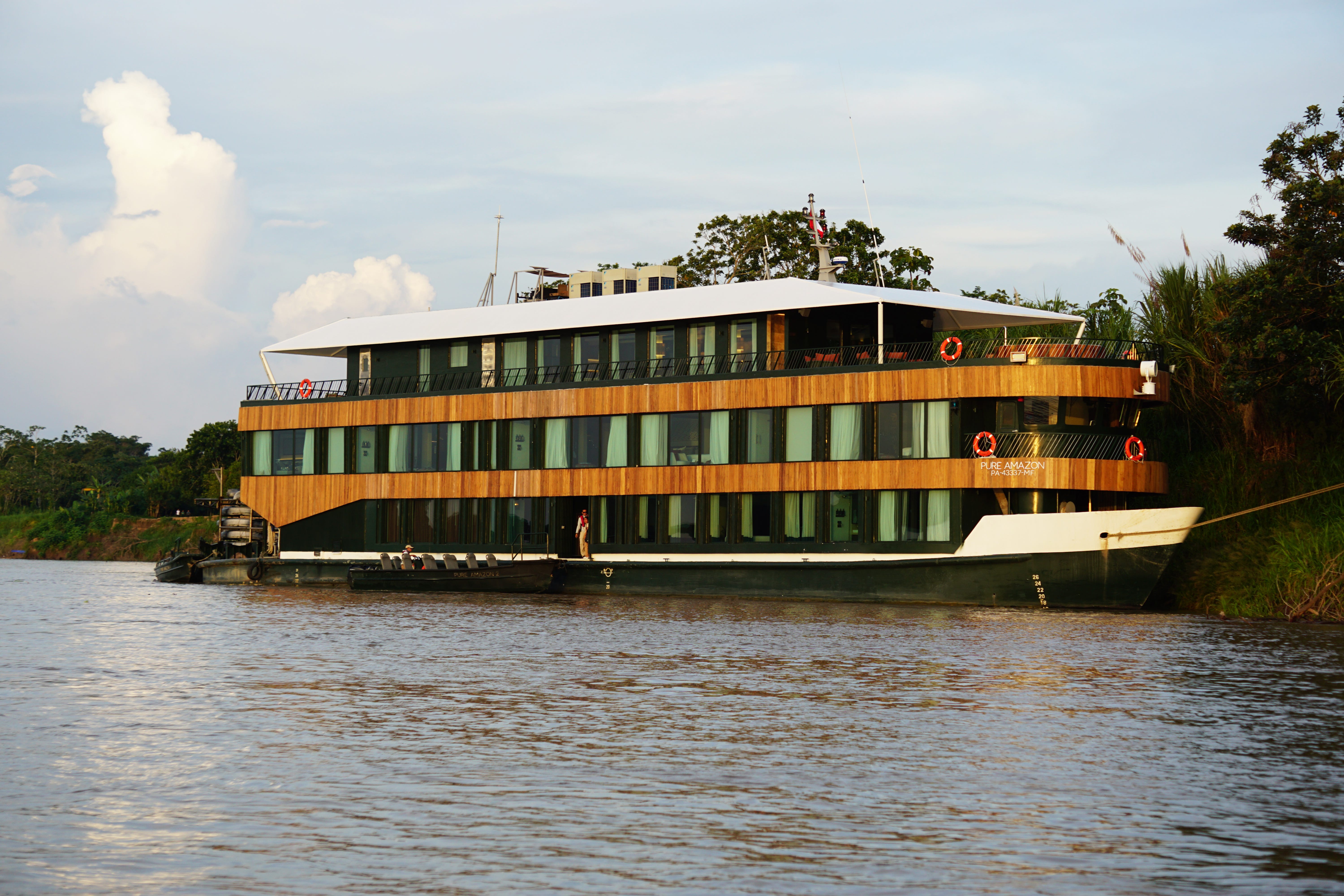
Our welcome onto the Pure Amazon was a joyous, raucous celebration for which none of us were quite prepared. The entire crew greeted us with music, singing, and dancing—as well as much-needed refreshing drinks and cool towels—as we filed one by one past our equipment lockers, and into the bar lounge that would become our informal expedition HQ. Designed by Milan-based architect Adriana Granato, of Studio Ibsen, the boat’s interiors were minimally yet warmly decorated, with accents of dark wood, deep green, and bright orange. Subtle contextual nods included patterned textiles, and wall-mounted ceramic tiles evocative of the scales of the elusive giant paiche—one of the world’s largest freshwater fish and a resident of these waters.
My quarters for the four-night voyage were surprisingly spacious, offering plenty of room to unpack and store away my belongings, work at the small desk, and lounge in front of the fully glazed facade stretching across the bedroom and bathroom. Staring out at the ever-shifting view as the boat sailed slowly along the river was so soothing, though some small boats did pass by while I was showering beside the glass—but none seemed to notice or care. A king-sized bed granted me a deep sleep each night, and it was a thrill to wake up each morning and see where we’d parked for the day.
Skiff Expeditions
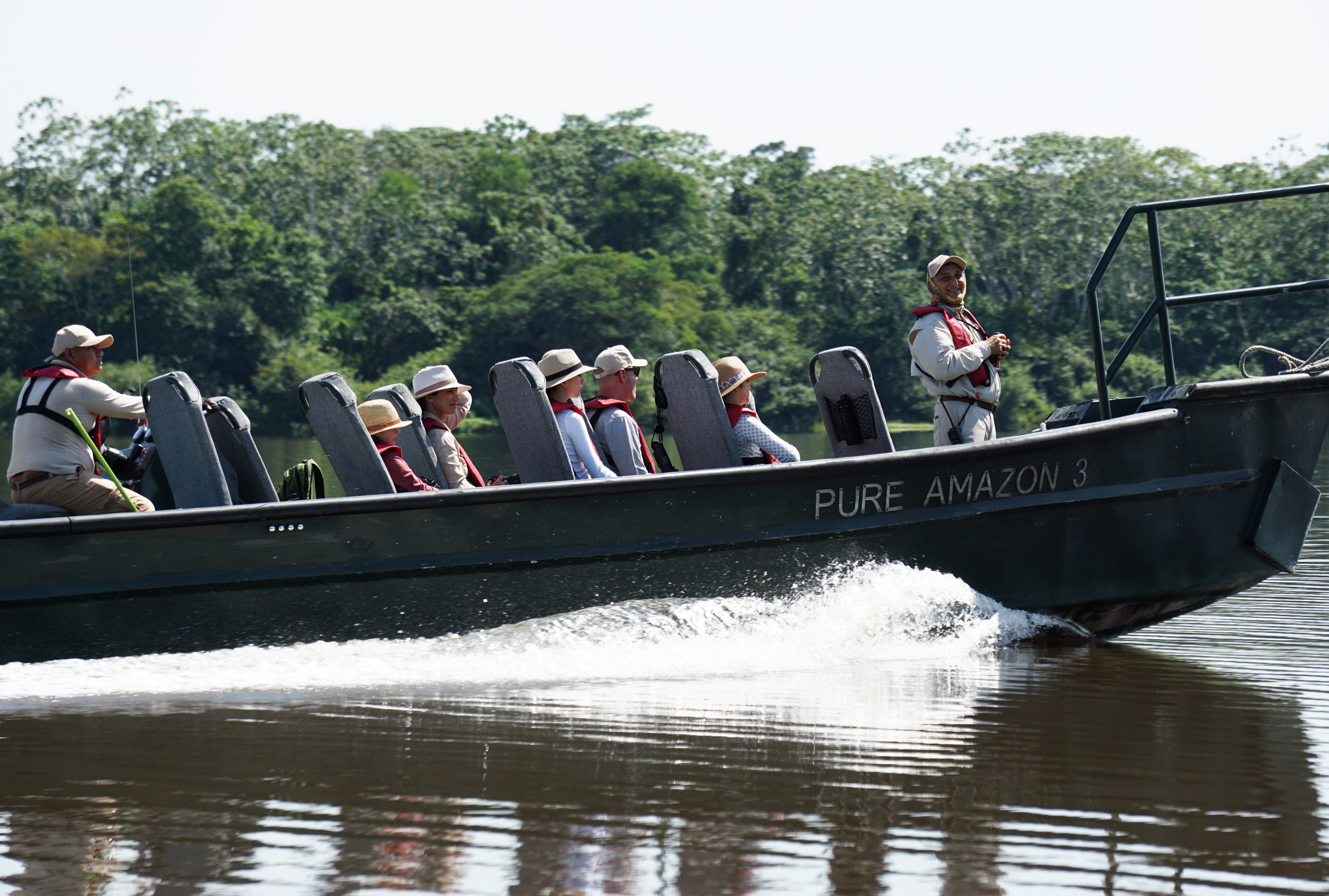
In October, at the tail end of the low-water season, our movements were somewhat restricted around Pacaya Samiria National Reserve—a sprawling five-million-acre protected area in Peru’s Loreto region and one of the world’s largest flooded forests. Each evening, our riverboat journeyed to a new location, and nightly briefings from our expert guides—Hulber, Robinson, and Javier, all highly qualified naturalists—outlined the next day’s route and activities. These involved multiple skiff excursions through rivers and tributaries in search of wildlife including pink dolphins, sloths, capybaras, monkeys, and a dazzling variety of birdlife, from kingfishers to hawks. Sir David would have been proud.
The early morning skiff rides were my favorite, rising at dawn to gear up and board the skiffs while the light was still dim and the temperature still bearable. Feeling the fresh breeze whip around us was exhilarating as we sped across the vast river, heading towards its tree-lined banks and navigating into the narrower waterways where the most wildlife could be found. Our guides’ eagle eyes—and ears—were astonishing: spotting sloths asleep high in the canopy and hearing monkeys moving through the trees hundreds of feet away. Occasionally, we’d stop to meet fishermen who would show us the catfish and roe they’d caught, and wave as we passed families farming on the banks.


The dolphins needed no pointing out. We frequently saw them surface close to the skiffs, and watched them splash from the boat’s decks and windows. For bird lovers, this place was paradise. Stark white egrets cut elegant silhouettes against the dark greenery as they waited patiently on bankside logs, kingfishers darted from branch to branch, parrots flew in formation overhead, and birds of prey scanned the landscape from the lofty trunks of dead trees. Our skiff’s night excursion proved less fruitful, but slowly meandering through the narrow channels under torchlight was magical regardless (one of the boats caught a glimpse of a capybara wading in the shallows though).
Kayaks, Parakeets, & Piranhas
Between wildlife excursions, we also had opportunities to take part in activities on and around the water. While kayaking across an expansive lake, we watched hundreds of cormorants take flight—straight out of a Planet Earth episode—and during a fishing trip, every one of us caught a piranha, which were considerably smaller than I had imagined. One afternoon, a short jungle walk led us beneath a dense forest canopy, past enormous banyan trees draped with roots, to a peaceful pond blooming with giant Victoria water lilies.
Another morning, we visited a riverside village where residents live in temporary stilted homes to accommodate rising waters, often relocating entirely when the river changes course. Families warmly greeted us, selling handcrafts made from folded grasses, while an adorable child followed us around with a parakeet perched on his head. Grocery stores stocked familiar snacks, and an empty nightclub blasted bass-heavy reggaeton in the middle of the afternoon. Most striking of all were the campaign posters for Peru’s upcoming elections—oddly tethering this remote corner of the world to national politics.
Life On Board
“Cruise food” is notoriously mediocre, but we were truly spoiled aboard the Pure Amazon. Breakfast and lunch buffets overflowed with tropical fruit (don’t even get me started on the mangoes), pastries, and savory dishes. Each evening, meanwhile, brought a five-course dinner with wine pairings featuring elevated takes on local cuisine: endless varieties of Peruvian potatoes, regional fish with subtly spiced sauces, and beautifully plated grains, greens, pulses, and root vegetables. How they managed to source and prepare all this on a boat remains another Amazonian mystery.
Beyond the 12 cabin suites on the middle deck and the back-of-house areas, the boat also housed a library of resources including wildlife encyclopaedias and even skulls of some monkey species. There was a small gym that I don’t think anyone used, and, of course, a small gift shop that I scoffed at as we boarded, but from which I almost bought a soft-toy sloth by the end. Best of all, there were two very well-stocked bars serving just 22 guests, and the bartenders enthusiastically mixed pisco sours, gin and tonics, martinis, and more whenever requested.


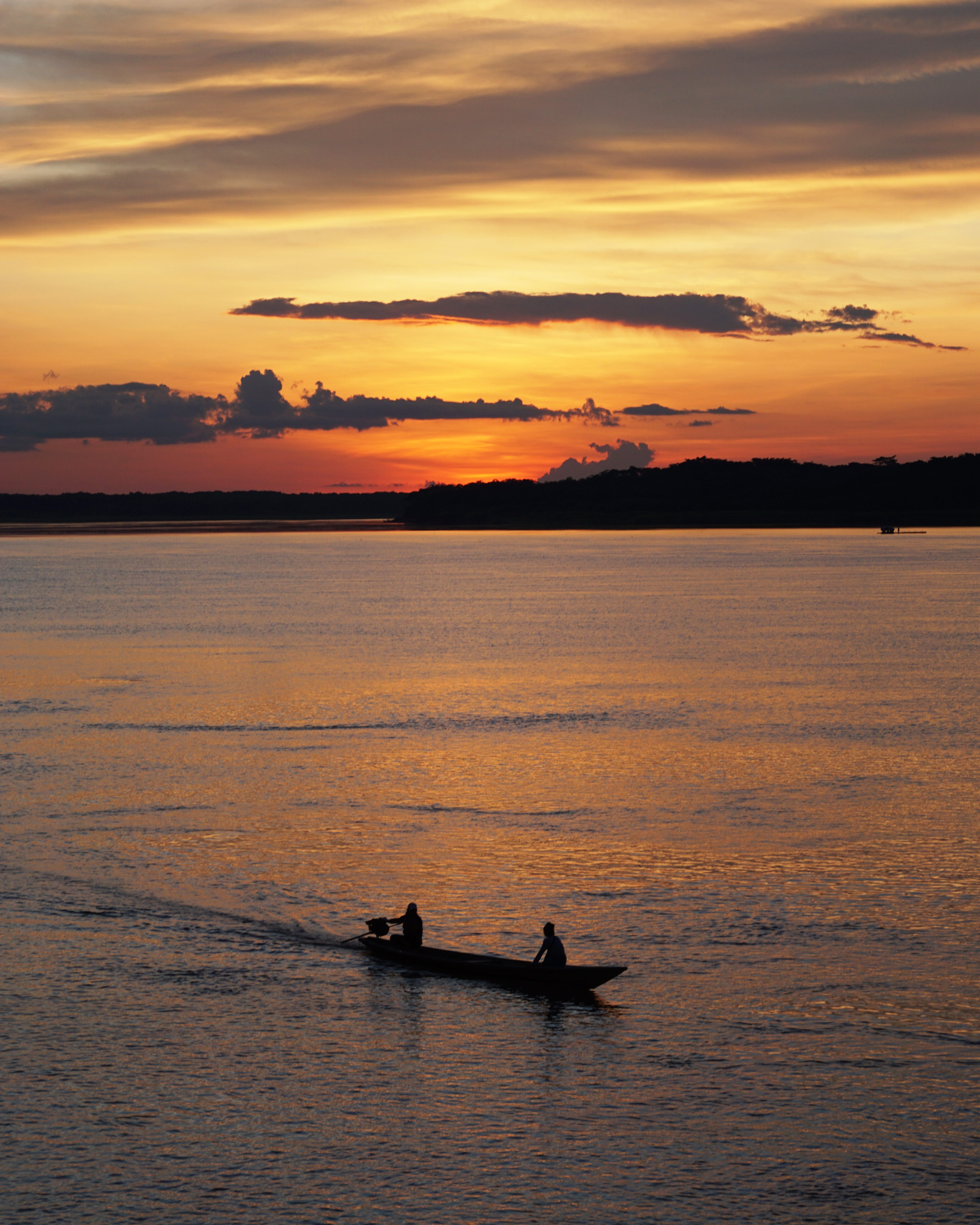
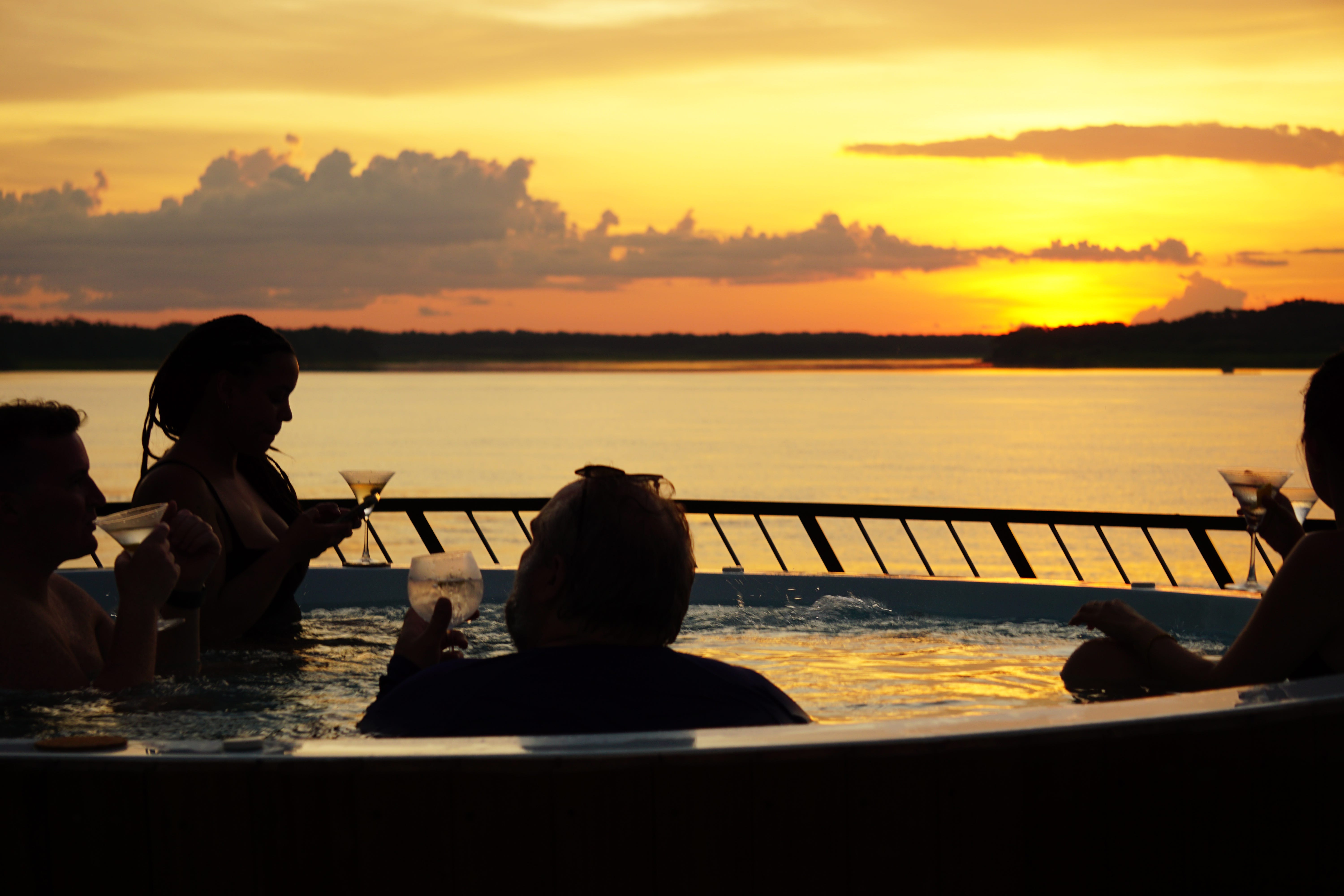
We enjoyed our drinks during the briefings on the lower deck, while relaxing in the upper deck lounge, and in the open-air hot tub at the boat’s stern. It was from here, soaking in the bubbling water, that we witnessed some of the most spectacular sunsets I’ve ever seen. Dark clouds streaked and billowed across the brightest orange sky that slowly shifted to purple as light dwindled—all of which was also reflected in the vast expanses of water that give Pacaya Samiria the nickname “Forest of Mirrors.” Proudly, one of my sunset photos even made the cover of Luxury Travel Advisor’s Spring 2026 print issue, with many thanks to editor Cameron Sperance!
Saving This Fragile Ecosystem
On the bus ride back to Iquitos—and ever since—I haven’t stopped fretting about the future of the richly diverse ecosystem I was privileged to explore. The Amazon is facing severe, interconnected threats that are pushing the ecosystem toward a dangerous tipping point. Deforestation for commercial farming, illegal mining, plus flooding, droughts, and fires exacerbated by climate change are compounding one another, and together could spell global disaster. The lungs of our world are being choked, and far too little is being done to stop it.
I witnessed firsthand the Peruvian Amazon’s unprecedented drought conditions and record-low water levels, which are isolating Indigenous communities reliant on the river for food, medicine, and essential supplies. Pink dolphin populations are plummeting, while species from jaguars and giant river otters to harpy eagles remain critically endangered.


I rarely encourage more tourism to a destination—many issues of this newsletter have lamented over-tourism—but I genuinely believe more people should witness wildlife in its natural habitat. Watching Planet Earth is one thing, but seeing these creatures with your own eyes and immediately hearing about their struggles is something else entirely.
That said, don’t simply show up in the jungle. Trips like this should be undertaken with responsible operators like Abercrombie & Kent, which fairly compensate staff, support local communities, and are invested in protecting the environment both financially and through education. Plus, everyone wearing an A&K shirt—from airport porters and bus drivers to Emily, our endlessly bubbly Pure Amazon host—was warm, knowledgeable, and deeply invested in the guest experience.
Of course, very few people can afford such an adventure. But since those with the means—and influence—to change global systems often can, I hope more might choose a journey like this over yet another yacht trip to Mykonos or Saint Barths. The river cruise was just as luxurious, but had much more substance and purpose. Perhaps then they’d better understand the fragility of our natural world, and the consequences of corporate greed and resource depletion elsewhere. We all need to become better stewards of this planet, and travel to places like the Amazon can inspire us to ask an important question: WWDAD—What Would David Attenborough Do?
Far-Flung Corners is currently accepting pitches and partnership opportunities. If you own or represent a hotel or destination that you think would be a great fit for the publication, or would like to explore options for bespoke content, please get in touch!
All photography featured in Far-Flung Corners is my own, unless specified otherwise. Don’t forget to follow @farflung.corners on Instagram for more photos, updates, musings, and more. Love, D x
The boat itself looks beautiful, and your description of the surroundings and animals is amazing! Sounds like an awesome adventure.
This article serves as great inspiration to look beyond the typical destination, comfort and adventure can go hand in hand!