

An Architectural Pilgrimage to Sea Ranch
Issue 013 Essay: Why visiting beloved buildings with more purpose and intention will vastly improve your travel experience.

“Never meet your heroes,” the saying goes. That’s probably sound advice when it comes to celebrities—particularly these days—but what about buildings? Whether or not you consider architectural structures “icons,” as I do, several famous buildings and monuments are likely to appear on travelers’ “bucket lists” (a phrase I’m banning from here on out, FYI), and I’d bet that more man-made structures than natural wonders appear on many. We have to admit, the chance of seeing certain skyscrapers, monuments, places of worship, and standalone follies IRL gets us excited.
The Sex and the City scene when Carrie Bradshaw squeals with delight upon spotting the Eiffel Tower from her hotel balcony (at the Plaza Athénée, no less) is forever burned into my brain as a perfect example of architecture-induced glee. No shade: her reaction is totally relatable. But why do artfully stacked piles of bricks, carefully arranged stones, or, in the French capital’s case, expertly welded lengths of iron elicit so much fervor and emotion from us? Put simply: humans can’t get enough of their own ingenuity.
Buildings represent some of humanity’s most impressive achievements, and many famous examples have become emblematic of the city or country in which they stand. They’re at once symbols of culture and anchors for orientation, and therefore naturally form the backbone of most sightseeing itineraries. Almost every major city has at least one landmark structure, after all. Those who’ve longed to visit Rome will inevitably stop at the Colosseum, and first-timers in Beijing will no doubt work-in a tour of the Forbidden City. The Sagrada Familia is Barcelona’s most visited site by far—and it’s not even finished.
Whether getting up close, peeking inside, or admiring from afar as part of a skyline or landscape, we’re certainly willing to spend a lot of money to see our favorite buildings in person—and considerably more for a room with a view of them, or better still, within them. Some trips even revolve entirely around a single site or structure. The late Frank Gehry’s Guggenheim Museum in Bilbao sparked a phenomenon—tourists flew-in just to see the shiny new building, and the whole city’s economy boomed as a result. Other sites see fewer benefits, like the Leaning Tower of Pisa or the Taj Mahal, where hordes of travelers will rock-up for the obligatory photo opp and then promptly depart on their coaches without noticing or contributing anything else—neither sustainable nor beneficial.
What are visitors getting out of these flash encounters, and why allocate so much money and energy to a fleeting drive-by? One would hope they gain a sense of awe, a deeper appreciation of history and culture, and a greater understanding of the world. But I suspect many leave with nothing more than a handful of pics that never make it off their phones, and a check mark on the list-that-shall-not-be-named. At the same time, the sheer volume of people at many of these sites makes the experience less meaningful for everyone. Barcelona, Venice, Kyoto, and many others are facing this problem and pushing back hard against over-tourism as a result. We should ask ourselves if it’s really worth lining up with thousands of others to get a partially blocked glance of a bridge, a tower, or a temple—no matter how famous (and this goes beyond architecture, too).
I’m the first to admit my love of visiting buildings all over the world. As a recovering architecture graduate, and a writer and editor for shelter publications for the past 15 years, my must-see list includes both the renowned and the niche. In the past I’ve taken a solo half-day detour from San Diego to see Louis Kahn’s Salk Institute, dragged my husband across Lisbon to AL_A’s MAAT museum (nearly missing our cruise departure), and even rerouted an entire rugby team to show them Zaha Hadid’s Guangzhou Opera House.
Rather than simply show up, snap a few photos, and move on, I always try my best to dig deeper—research the history, understand the context, and consider the building’s impact today. Visiting any site in-person creates a much more tangible connection, and builds long-lasting memories. So for me, a special excursion to check out any of my favorites is always worthwhile. I’ve chosen to call these intentional expeditions “architectural pilgrimages,” and, as with any pilgrimage, the aim is to personally reflect along the way too.
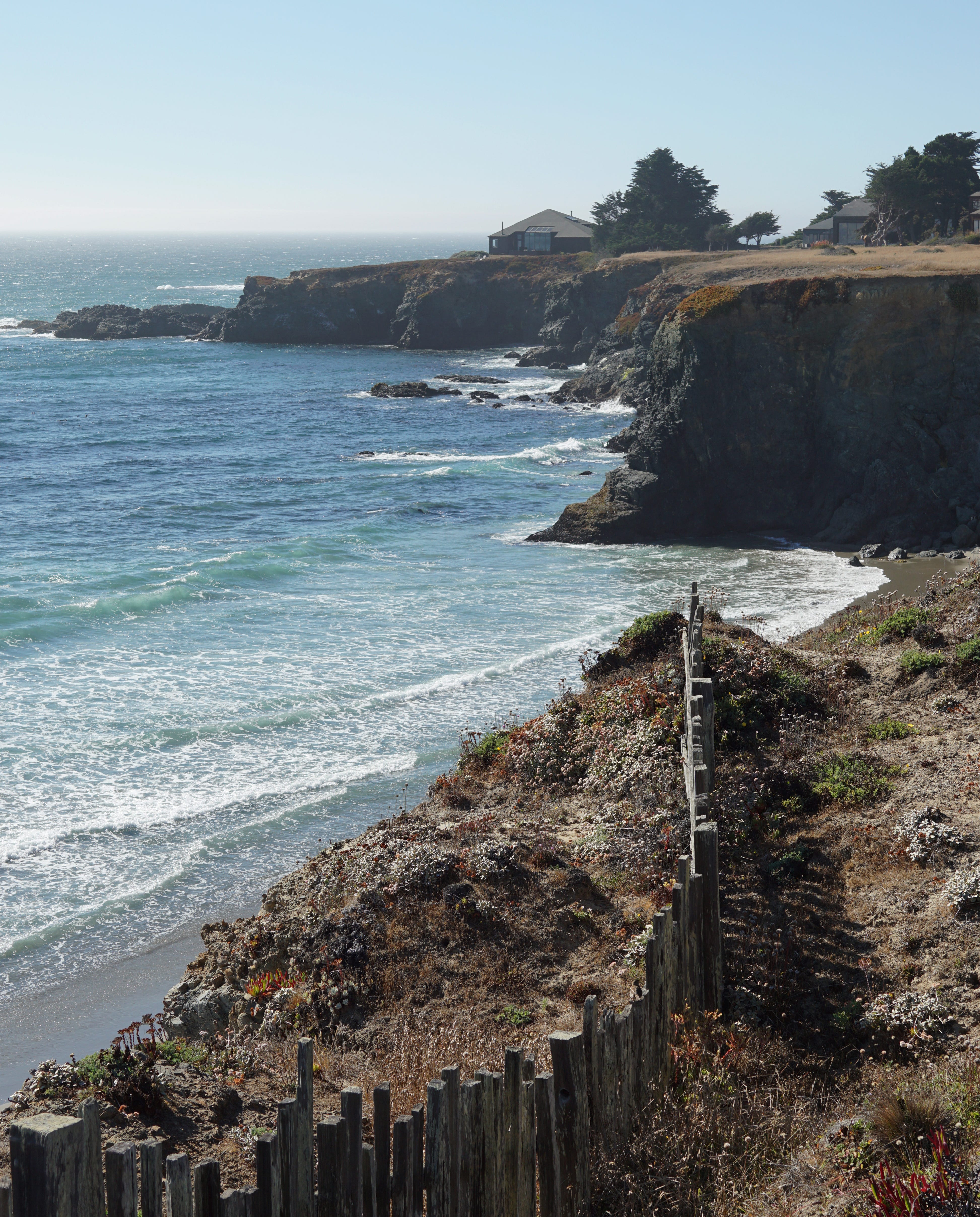
For many years, Sea Ranch has held the coveted top spot on my personal architectural pilgrimage wish list. Ever since university, when I learned about this unique modernist enclave and the contributions of its notable architects, I’ve longed to experience the place firsthand. Stretching nine miles along a remote stretch of California’s rugged Pacific Coast, the planned community was developed in the 1960s by a group of like-minded individuals who envisioned a haven where architecture and nature would seamlessly coalesce. They created strict design regulations to ensure any construction enhanced rather than disrupted the dramatic coastal landscape.
These environmentally sensitive principles they established—from mandating wood cladding and sloping rooflines, to carefully positioning windows to maintain privacy—are still upheld by the Design Committee today. Annoying for new residents? Perhaps. But their diligence has preserved the area as a powerful example of harmony between the natural and the man-made.
After years of dreaming, I finally had the opportunity to visit and stay overnight at Sea Ranch in August 2025, as part of a group trip organized by the locally based Flowers Winery. The timing couldn’t have been more convenient: my Green Card application had restricted international travel, and I was taking the opportunity to explore more of the US (read about my Oregon trip here). Starting with two dreamy days sipping Flowers’ chardonnay and pinot noir while learning about the unique Sonoma Coast terroir, we spent the final 24 hours of the trip at The Sea Ranch Lodge. (A more detailed review is coming later in Issue 013.) At last, here was my chance to see one of the world’s greatest concentrations of preserved modernist architecture.
The coastal drive alone—spectacular, winding, and slightly nauseating—only heightened my anticipation. Upon arrival, my excitement was at fever pitch, and thankfully, entirely justified. The striking landscape immediately instilled a sense of serenity, while the sculptural buildings amplified the drama of the coastline. Standing between these timber structures and the roaring ocean, I was assured why Sea Ranch holds such iconic status for me. The unwavering commitment to context, combined with the dream of building a rural community along with friends, is exactly how I imagine living one day—a pie-in-the-sky idea for now, but I’ll happily indulge the fantasy.
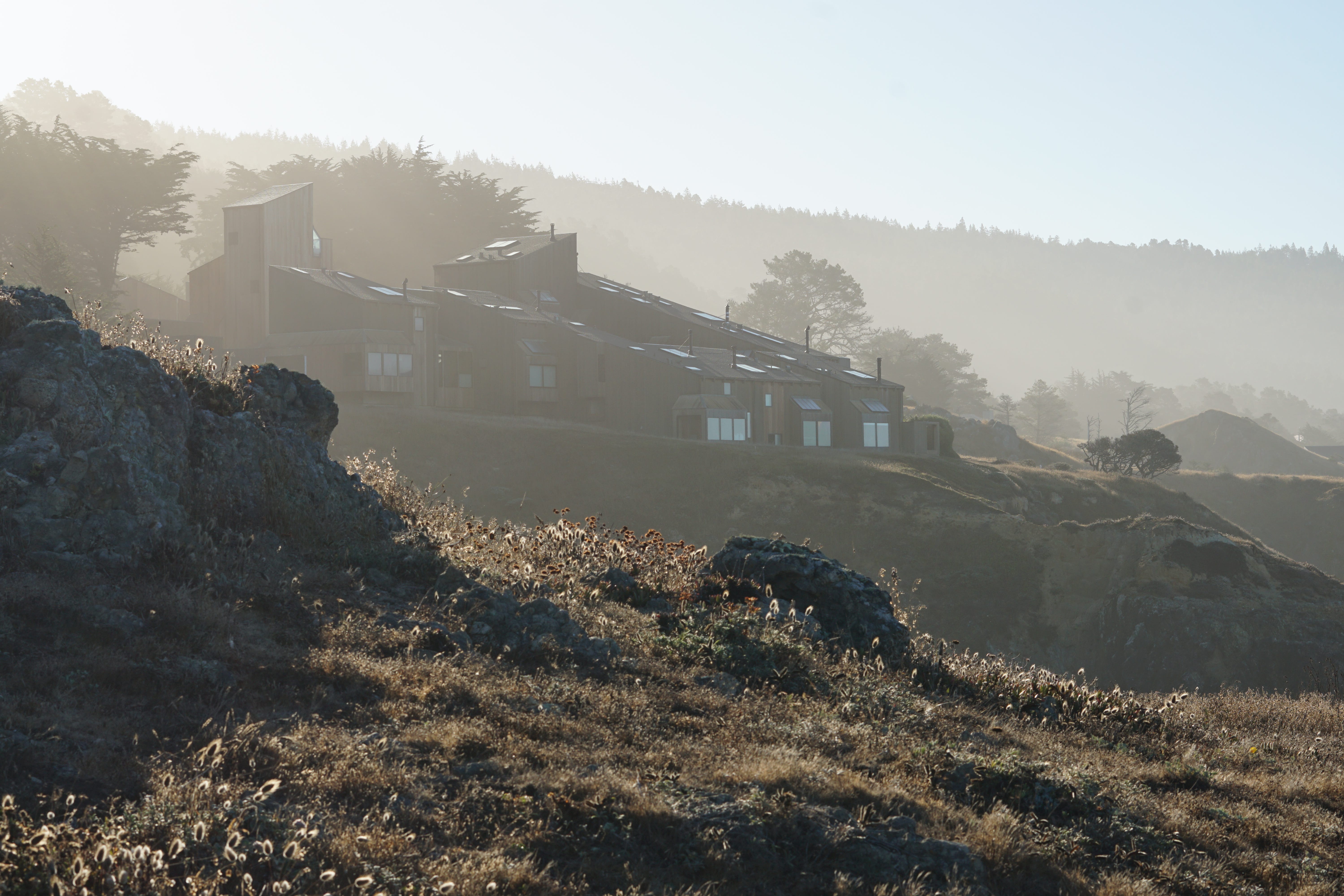
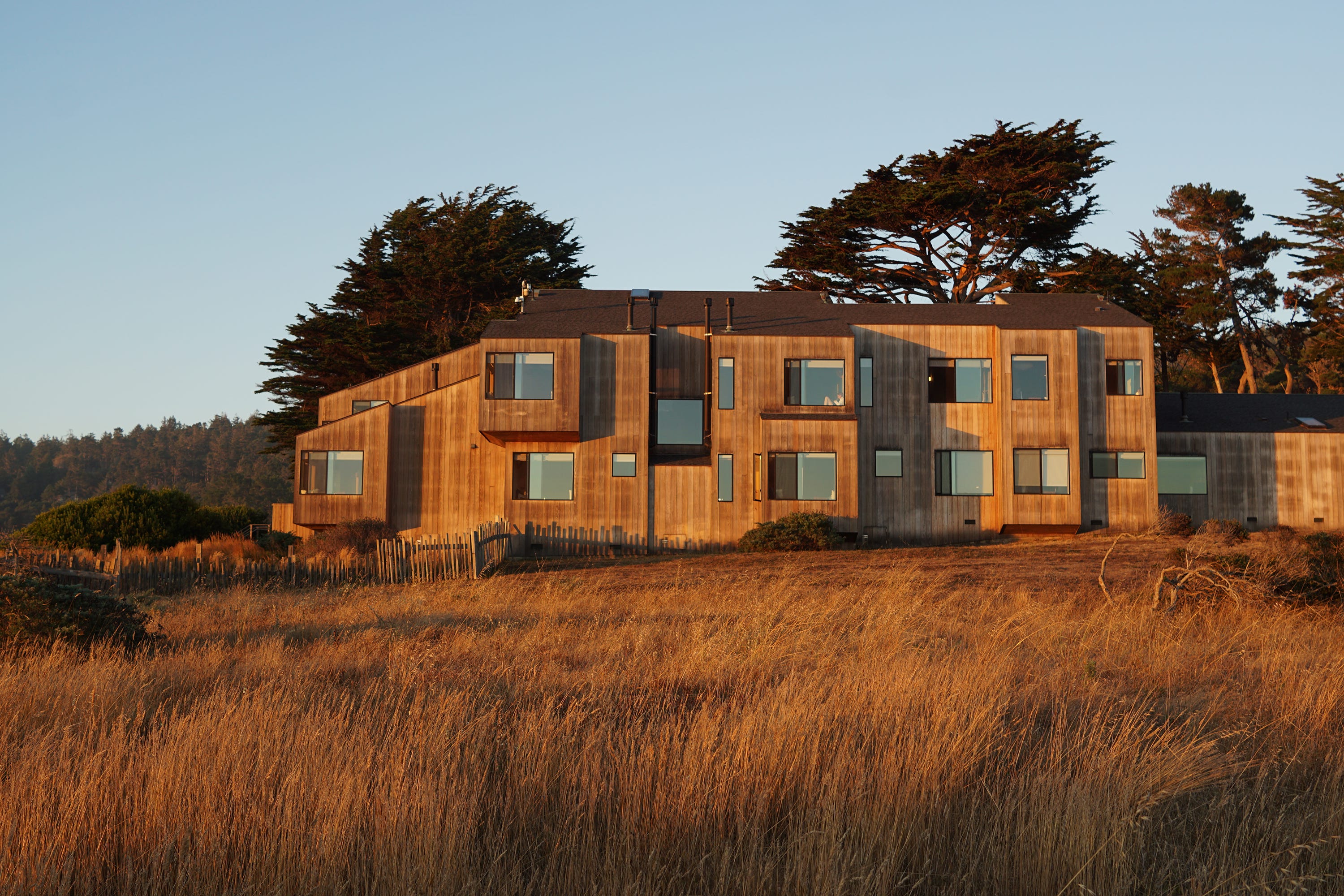
With only limited time to explore, a few of us walked along the cliffs to admire the private residences, and I felt a sharp pang of envy for those lucky enough to call this place home. Later, the famed California sunset did not disappoint, and I dashed out of dinner multiple times to photograph the lodge in blazing orange light. Even after stargazing late into the night, I woke at dawn to capture the misty morning gloom, watching the fog slowly lift from the buildings and cliffs to reveal the sun’s low rays. Shortly after, a studio visit with local photographer Arun Patel became an impromptu adventure through a nearby redwood grove, where we were suitably humbled beneath the towering trees.
One of the greatest joys of the trip was the relative solitude. Hardly anyone else was around, allowing me to savor the quiet, the remoteness, and the sheer beauty of the place uninterrupted. In writing about Sea Ranch now, I’m by no means advocating for everyone to rush out and visit at once. But if you’re equally enamored by its story, do make it a point to go someday—let’s just please keep it as special as possible.
In that vein, I’m encouraging you, Far-Flung Corners readers, to pause and consider which other buildings or monuments are on your own must-see list, and why. Perhaps there’s a personal connection: your parents took a picture in front of one during their honeymoon, or another plays a starring role in your favorite film. Or maybe it’s the engineering, the mythology, or the cultural significance that fascinates you. Ideally, it’s all of the above. For any visit, there should always be a purpose beyond following the crowds and checking a box. With a little research that goes beyond scanning a “top 10 things to see…” article, a trip immediately becomes more intentional.
Needless to say, my experience at Sea Ranch exceeded every expectation. I didn’t just “meet” my hero—I was utterly spellbound. And along my pilgrimage, I learned several things. I crave contact with nature far more than I used to. I firmly believe in sustainable development that works with the land rather than against it, and now recognize the need to champion it more actively. I deeply enjoy photography, and am gaining more skill and confidence behind the lens (a heartfelt thank-you to pro Daniel Gorostieta for the encouragement and tips!). And, perhaps most meaningfully, I was reminded why I chose to study architecture in the first place.
So here’s to many more architectural pilgrimages to come—for me, and hopefully for you too.